
Johannes-Franciscus Bonfrère, who everyone calls Jo Bonfrère, was born on the 15th of June, 1946, in Eijsden, Limburg, Netherlands. The Dutch football coach and former midfielder started and ended his career with one club, MVV Maastricht, from 1963 to 1985, playing a total of 335 games and scoring 50 goals. He is called a “one-club man” because he never played for another team.
In Dutch football, there are other famous one-club legends like Sjaak Swart of Ajax (1956–1973), who made 603 appearances and won three consecutive European Cups along with multiple domestic titles; Piet Keizer, also of Ajax (1961–1974), who played 489 matches, scored 146 league goals, and claimed three European Cups, six Eredivisie titles, and five KNVB Cups; and Jan van Schijndel of SVV Schiedam (1945–1960), who won the 1949 league, the first Supercup, and earned 17 national caps.
Jo Bonfrère Early Coaching Years
While he was still playing at MVV, he started coaching in 1983. He was what they call a player-coach, which means he played for the team but also helped manage and make decisions for it.
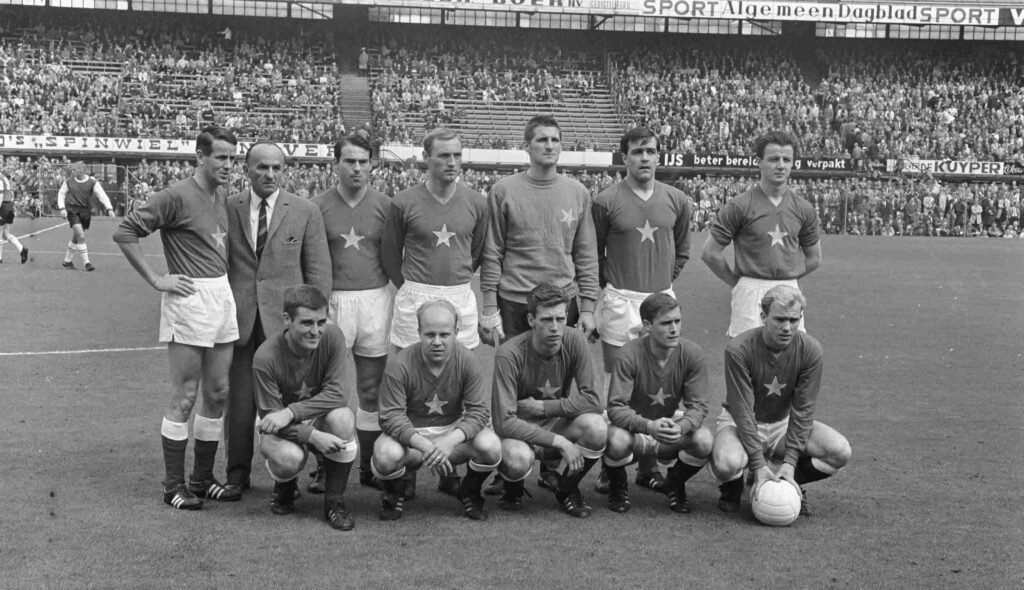
When he retired as a player in 1985, he continued managing the team. Later, from 1988 to 1990, he went to Belgium to coach a club called Verbroedering Geel.
In 1991, he coached the Nigerian women’s national team. He then returned to Verbroedering Geel for the 1992–1993 season.
1996 Olympic Football
Before 1996, African teams usually lost early in the Olympics. Only three African countries have won Olympic football medals. Ghana was first in 1992, winning bronze by beating Australia. Nigeria won gold in 1996 and silver in 2008 after losing to Argentina. Cameroon won gold in 2000 by beating Spain on penalties. No other African country has added to this medal list since then.
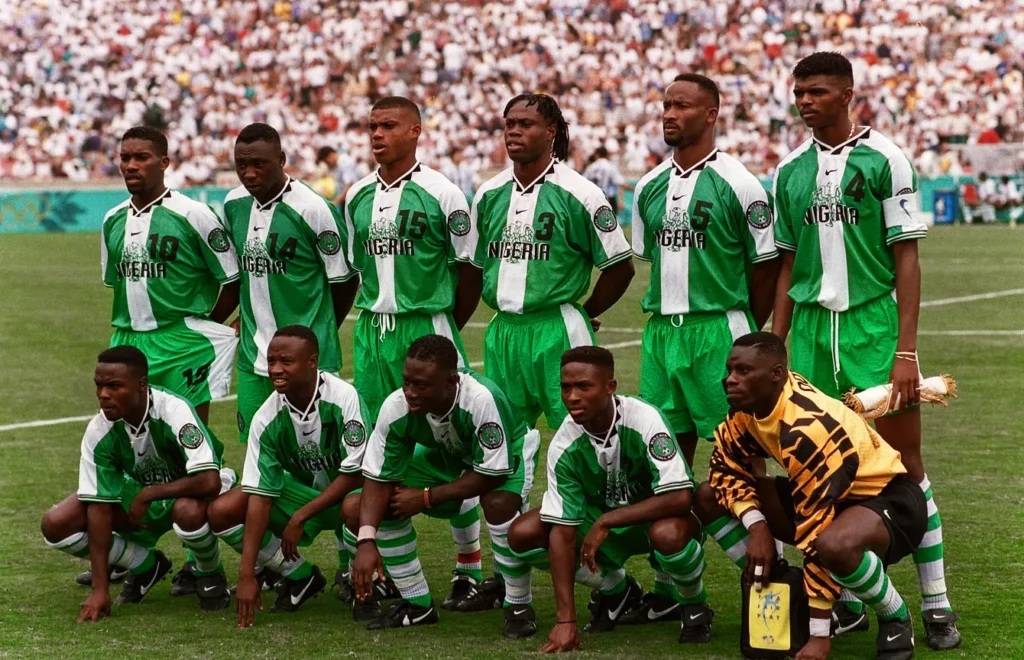
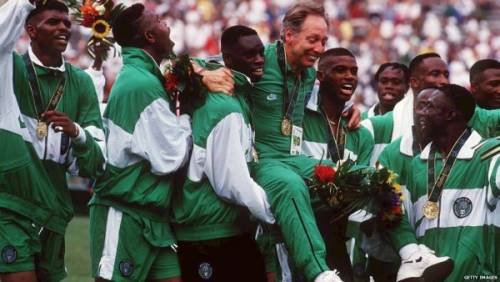
Bonfrère later took charge of Nigeria between 1995 and 1996 and returned to Nigeria from 1999 to 2001. In the 1996 Summer Olympics in Atlanta, Nigeria’s men’s under-23 football team, known as the “Dream Team,” won gold under Bonfrère. They defeated Brazil 4–3 in the semi-final with a “golden goal” by Nwankwo Kanu and came from behind to beat Argentina 3–2 in the final with a late goal by Emmanuel Amuneke.
This was the first time an African country had ever won Olympic gold in men’s football. The team included players who became football legends, such as Jay-Jay Okocha, Taribo West, Daniel Amokachi, Kanu, and Amuneke. Bonfrère later revealed that he was never allowed to receive his Olympic gold medal on the podium.
2000 AFCON Final
He guided Nigeria to the 2000 African Cup of Nations co-hosted by Nigeria and Ghana, taking the team to the finals where they lost to Cameroon on penalties. The AFCON 2000 final was played on 13 February at the Lagos National Stadium. Nigeria reached the final with Jo Bonfrère leading the Super Eagles. Cameroon reached the final under their French coach, Pierre Lechantre. The match ended 2–2 after extra time, and Cameroon won 4–3 on penalties.
Cameroon took an early lead. Samuel Eto’o scored in the 26th minute, and Patrick M’Boma scored again in the 31st minute. Nigeria fought back when Raphael Chukwu scored in the 38th minute, and Jay-Jay Okocha made it 2–2 in the 52nd minute. No one scored again in extra time.
Nigeria’s line-up included Shorunmu in goal; Okpara, Iyenemi, West and Babayaro in defence; Oliseh, Adepoju, Okocha and George in midfield; with Kanu and Chukwu in attack. Cameroon’s line-up included Boukar Alioum in goal; Pierre Njanka, Rigobert Song and Raymond Kalla; Pierre Womé; Marc-Vivien Foé, Lauren, Salomon Olembe and Geremi; and the forwards Samuel Eto’o and Patrick M’Boma.
In the penalty shoot-out, Cameroon scored through Patrick M’Boma, Pierre Womé, Geremi Njitap and Rigobert Song, whose kick decided the match. For Nigeria, Jay-Jay Okocha and Godwin Okpara scored, while Nwankwo Kanu’s penalty was saved by Boukar Alioum. The shoot-out finished 4–3. Pierre Lechantre went on to lift the AFCON 2000 trophy with Cameroon.
Jo was offered a 3-bedroom apartment by the Nigerian government on the 7th of June, 2018, as part of the promise made by late General Sanni Abacha after winning the gold medal at the Atlanta Olympics for Nigeria.
Middle East Coaching Roles
His career also involved Qatar between 1996 and 1997.
Later, he joined Al-Wahda in 1998.
Again, he joined Al-Wahda for 2001-2002 and 2007-2008.
In 2001-2002, he managed the United Arab Emirates.
Later in 2002/03, he joined Al Ahly in Egypt. Here, he lost the league in the last match with a two-point margin. This resulted in the termination of his contract.
South Korea
He was hired to coach the South Korea national football team in June 2004 to replace Humberto Coelho, who was forced to quit after a draw with the Maldives national football team in a FIFA World Cup qualification.
The Dutch coach got off to a promising start by crushing a highly rated German squad of World Cup stars such as Michael Ballack and Oliver Kahn, 3–1, with a young Korean team in a friendly match in December 2004.
In 2005, South Korea qualified for the 2006 FIFA World Cup under him, but a string of disappointing losses thereafter fueled fan and media ire against Bonfrère.
He resigned on 23 August that year after poor results in the East Asian Football Championship and a World Cup qualifier loss against Saudi Arabia.
Korea Football Association then hired Dick Advocaat as its third Dutch coach, and Advocaat angered his predecessor by saying he will be another Guus Hiddink, not Bonfrère.
China and Later Career
Bonfrère joined former Chinese Super League champions Dalian Shide on a one-year contract in the 2007 league season. Despite the team finishing fifth in the league, they were never in contention to win the title and opted not to extend his contract.
On 29 June 2011, another Chinese Super League club Henan Construction announced that Bonfrère would lead the team on a 1+1 contract and fight for staying in the Super League.
In February 2015, Bonfrère was added to the MVV youth team staff.
On 25 May 2017, China League One club Baoding Yingli ETS signed a one-year contract with Bonfrère.
Jo Bonfrère — Managerial Career
| Period | Team / Club | Highlights / Notes |
|---|---|---|
| 1995–1996 | Nigeria national under-23 football team | Led them to the 1996 Olympic Games gold medal in Atlanta |
| 1996–1997 | Qatar national football team | First major assignment after Nigeria U‑23 success |
| 1998 | Al-Wahda FC (UAE) | Short stint as club-level coach in the Gulf region |
| 1999–2001 | Nigeria national football team | Managed Nigeria senior national team; reached the final of the 2000 Africa Cup of Nations (lost to Cameroon on penalties) |
| 2001–2002 | Al-Wahda (UAE) and United Arab Emirates national football team | Managed both a club and national side in the Emirates |
| 2002–2003 | Al Ahly SC (Egypt) | Coached one of Africa’s biggest clubs; tenure ended after narrowly missing the league title by two points |
| 2004–2005 | South Korea national football team | Led Korea to qualification for the 2006 World Cup, but resigned in August 2005 after a string of poor results |
| 2007 | Dalian Shide (China) | Took a one-year contract in the Chinese Super League; team finished fifth |
| 2007–2008 | Returned to Al-Wahda (UAE) | Another stint in the Gulf region |
| 2011 | Henan Jianye (China) | Signed a 1+1 contract to help the team avoid relegation |
| 2015 | Returned to MVV Maastricht (Netherlands) – youth team staff | Joined the MVV A-youth (under-19) technical staff |
| 25 May – October 2017 | Baoding Yingli ETS (China League One) | Signed a one-year contract with the Chinese club |
Jo Bonfrère Controversies & Criticism
Bonfrère led Nigeria to Olympic gold in 1996, even though the team faced a lot of problems. The preparations were messy, money was short, and the Nigeria Football Federation (NFF) got in the way. Players like Austin “Jay-Jay” Okocha said the team’s bus was taken away and Bonfrère even walked out over unpaid bills. Bonfrère has said, “Nigeria football is not the quality that I think the nation’s football should be… We have very good players… but they use them wrongly.”
He has often criticised Nigerian football, pointing out bad tactics, interference in team selection, poor coaching education, and politics as reasons why the team is not performing well. In August 2021, he said, “Super Eagles players are good but they’re used wrongly,” and he has urged that local players be used better and coaches get proper training.
His criticism has caused arguments, like when he lost a 2020 defamation case to Clemens Westerhof over claims about a 1994 match. In 2025, he petitioned the Nigerian Senate about a land gift he was promised, asking, “If anyone deserves to be honoured… why has Bonfrere’s own [land gift] not been released?”
Bonfrère also points to bigger issues, like tribalism in selecting players and unstable finances for staff and players.

