This Article Was Last Updated: August 31, 2026 by Oseg Hale
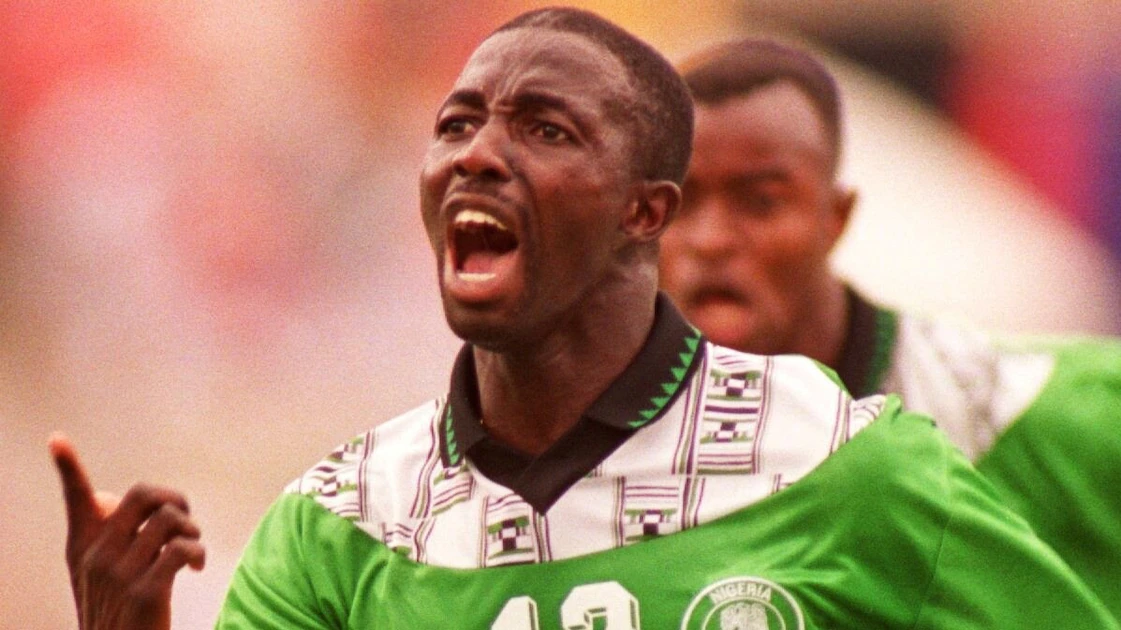
Samson Siasia is a former Nigerian striker and coach born on 14 August 1967 in Lagos, with roots in Bayelsa State. He played club football across Europe, including Belgium, France, Portugal, Saudi Arabia, Israel and Australia, with his peak at FC Nantes, winning the 1994–95 French league title.
He earned over 50 caps for Nigeria, played at the 1994 FIFA World Cup, and won the 1994 Africa Cup of Nations. After retirement, he coached Nigeria’s youth teams, leading them to silver at the 2008 Olympics and bronze at the 2016 Olympics. FIFA later banned him in a corruption case.
Football Career, Stats and Goals
Siasia began his professional journey in Nigeria in the early 1980s before moving into European football.
Nigerian Clubs (1982–1987)
He developed his early game in the Nigerian league system:
- Julius Berger FC (1982–1984)
- Flash Flamingoes (1985–1986)
- El-Kanemi Warriors (1987)
These clubs helped him build his reputation as a direct, pacey forward capable of playing both centrally and on the wings.
European: KSC Lokeren (1987–1993)
His major career breakthrough came in Belgium with KSC Lokeren, where he spent six seasons.
Performance (Lokeren):
- Appearances: 151 league matches
- Goals: 31
- Total contributions (all competitions): 37–40 goals range, depending on the competition counting
- Average goal involvement: 0.25 per game
Features Of His Lokeren Spell:
- Became a regular starter in the Belgian top division
- Played in European competition (UEFA Cup appearances)
- Known for dribbling, acceleration, and movement off the ball
This period represents his most consistent club performance phase.
FC Nantes (1993–1995)
Siasia moved to France to join FC Nantes, one of Ligue 1’s strongest sides at the time.
Performance (Nantes):
- Appearances: 40 league matches
- Goals: 4
- Major achievement: 1994–95 French Ligue 1 Champion
Although his goal output was modest, he contributed as a tactical forward in a structured attacking system.
Later Club Career (1995–2000)
After France, Siasia’s career became more global and rotational:
- FC Tirsense (Portugal, 1995–1996)
- Appearances: 15
- Goals: 0
- Al-Hilal (Saudi Arabia, 1996–1997)
- Limited statistical data available
- Perth Glory (Australia, 1997–1998)
- Appearances: 22
- Goals: 3
- Zafririm Holon (Israel, 1998–2000)
- Appearances: 30
- Goals: 12
- Strong late-career scoring return
Career Totals (Club Football)
- Total appearances: 258–267
- Total goals: 50–56
International Playing Career
Siasia’s international career with Nigeria was a key part of his football identity.
Nigeria Senior Team (1987–1999)
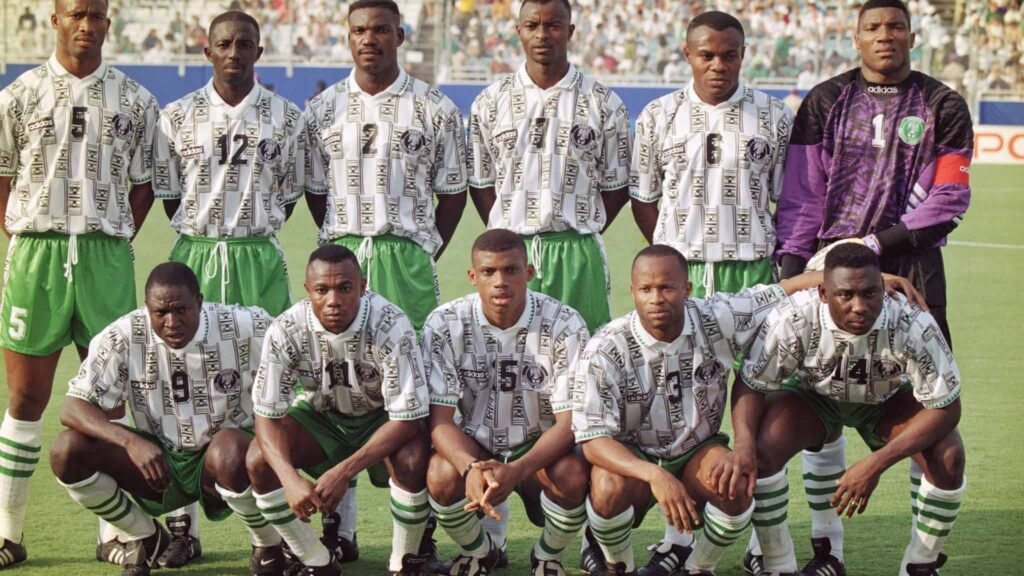
- Caps: 51
- Goals: 13–16 (record varies slightly by source classification of matches)
Major Tournaments
He was part of Nigeria’s “golden generation”, alongside players such as Jay-Jay Okocha.
1992 African Cup of Nations (Senegal)
- Nigeria finished: Bronze medal
- Siasia contributed as an attacking option in a developing squad
1994 FIFA World Cup (USA)
- Nigeria’s debut World Cup appearance
- Siasia featured in the squad that reached the Round of 16
1994 African Cup of Nations (Tunisia)
- Nigeria won the tournament
- One of the most significant achievements in Nigerian football history
Performance For Nigeria National Team
Siasia was not a traditional target striker but played as a mobile forward/wing attacker, often used to stretch defences and support the main striker.
Statistical Profile
- International goals: 13–16
- Goal ratio: 0.25–0.30 per match
- Role: Wide forward / supporting striker
Tactical Contribution
He was valued for:
- High work rate in pressing phases
- Ability to run behind defensive lines
- Link-up play in transition attacks
- Versatility across front positions
Standing In Nigeria’s Attacking Hierarchy
During his era, Nigeria had several elite forwards, which limited his central attacking role. Despite this, he remained a consistent squad member for over a decade because of his tactical importance aside from goal scoring.
Samson Siasia Coaching Career
His coaching career is well known in Nigerian football, especially for youth development and Olympic competitions. He worked with youth teams, Olympic teams, and the senior national team. His career includes major success as well as challenges linked to football administration in Nigeria.
Transition From Player To Coach
Like Stephen Keshi, Samson Siasia represents a generation of Nigerian players who transitioned into coaching. Siasia started coaching after he stopped playing football in the late 1990s and early 2000s. He played professional football in Europe and for Nigeria, including at the FIFA World Cup and Africa Cup of Nations
His coaching style was shaped by his time in Europe with clubs such as FC Nantes and KSC Lokeren. Instead of starting with club coaching, he chose to work with Nigeria’s youth national teams. This later made him a coach known for developing young players.
Early Coaching Roles
His first major coaching job came around 2005 when he became coach of Nigeria’s Under-20 team. This was his first big international coaching role, where he led a team in major African and global competitions. He quickly became known for good tactical organisation and for building strong teams in a short time.
Under his leadership, the Flying Eagles reached the final of the 2005 FIFA World Youth Championship, where Nigeria finished second after losing to Argentina. He also led the team to win the African Youth Championship.
Roles In Nigeria National Teams
Siasia’s coaching career is closely linked to Nigeria’s national teams at different levels. In 2007, he became coach of the Nigeria Under-23 team. He improved the Olympic Eagles’ stability and helped prepare them for international competitions.
He later worked twice as head coach of the senior Nigeria national team. His first time started in 2010 when he replaced Lars Lagerbäck. In this period, he tried to rebuild the Super Eagles, but results were not strong, and Nigeria failed to qualify for the 2012 Africa Cup of Nations. His second time was in 2016 after changes in the Nigeria Football Federation, but it was short-lived because of unstable leadership and constant changes in management.
Achievements With Youth Teams
Most of Siasia’s success came from youth national teams, where he became known for developing players and performing well in tournaments. He won the African Youth Championship with the Nigeria Under-20 team and also reached the final of the 2005 FIFA World Youth Championship, finishing second. He helped many players move up to the senior national team.
At Under-23 level, his impact was even stronger. He led Nigeria to a silver medal at the 2008 Beijing Olympics after reaching the final against Argentina. He later guided the team to a bronze medal at the 2016 Rio Olympics, even though preparation and support were difficult.
Olympic And Tournament Involvement
Siasia has one of the strongest Olympic coaching records in African football, just like coaches like Jo Bonfrere. At the 2008 Beijing Olympics, Nigeria reached the final under his leadership and won the silver medal after losing to Argentina. The team was praised for good organisation, attacking play, and balance.
At the 2016 Rio Olympics, he led a less prepared team that still won the bronze medal despite financial and planning problems. These two Olympic medals place him among the most successful Olympic football coaches in Nigeria’s history.
Coaching Philosophy And Style
Tactical Approach
Siasia’s teams focus on structure, discipline, and fast attacking play. He often uses simple formations like 4-4-2 or 4-3-3, depending on the players available.
His teams play quick counter-attacks, using speed on the wings and fast passes forward. He also focuses on keeping the team compact when defending and pressing as a group.
The aim is to stay organised and compete strongly, even against more skilled teams.
Focus On Youth Development
A major part of his coaching career is working with young players. He focuses on helping players grow through real competition.
His approach includes:
- Giving chances to local and young players in international matches
- Teaching tactical discipline at youth level
- Preparing players to move into the senior national team
- Building mental strength for tournament football
His time with Nigeria’s U-20 and U-23 teams gave him a strong focus on developing players and preparing them for higher levels of football.
Samson Siasia FIFA Ban and Match Fixing Case
FIFA Disciplinary Action
FIFA banned Samson Siasia in 2019 after it found that he agreed to take part in a corruption-related plan linked to match manipulation. The World football governing body stated that he accepted an offer involving money connected to influencing football decisions, which breaks its ethics rules.
At the time, FIFA imposed a lifetime ban from all football activities and a fine of 50,000 Swiss francs. The case was part of a wider global investigation into organised match-fixing networks involving football officials and intermediaries.
Timeline Of The Case
The case began many years before the final decision. In 2010, Siasia was allegedly contacted by a known match-fixing figure who offered him a coaching opportunity linked to financial gain. The proposal involved influencing team decisions in a way that would benefit betting outcomes.
In 2019, FIFA officially opened disciplinary proceedings and later that year announced a lifetime ban. This meant he could no longer take part in any football activity anywhere in the world.
In 2021, the Court of Arbitration for Sport reviewed the decision and reduced the punishment to a five-year ban. The court said FIFA’s original punishment was too harsh compared to the offence. By 2024, the ban period had ended, making him eligible to return to football if approved by football authorities.
Match Fixing Allegations And Legal Proceedings
The central allegation was not that Siasia directly fixed a match, but that he agreed to be involved in a corrupt arrangement. Investigators said he was approached by a fixer linked to a betting syndicate and offered a role where he would influence team selection and decisions.
He denied the allegations throughout the process. However, FIFA argued that even agreeing to such an arrangement was a serious breach of ethics.
During the appeal, the Court of Arbitration for Sport made an important clarification. It stated that there was no proof that any match was actually fixed or that the plan was carried out. The case was therefore treated as an attempted or proposed corruption agreement rather than completed match manipulation.
Sanctions And Appeal Developments
FIFA’s Ethics Committee initially issued a lifetime ban and a financial penalty in 2019. This was one of the strongest possible punishments under FIFA rules and reflected the seriousness of match integrity offences.
Siasia appealed the decision, and in 2021, the Court of Arbitration for Sport reduced the ban to five years and removed the fine. The court ruled that while the behaviour was wrong and serious, a lifetime ban was not proportional because there was no evidence of actual match fixing taking place.
This appeal decision is often referenced in sports law discussions because it shows how disciplinary systems can be adjusted when penalties are considered too extreme.
Public And Football Community Reactions
The reaction to the case was divided. In Nigeria, many fans and football followers felt the punishment was too harsh, especially because Siasia was a well-known figure who had previously achieved success with national teams. Some people believed he was unfairly targeted or misunderstood, while others felt disappointed that a respected coach was linked to corruption allegations.
In the wider football community, opinions were more mixed. Some supported FIFA’s strict approach, arguing that strong punishment is needed even when corruption is only attempted, because it protects the integrity of the sport. Others agreed with the appeal outcome and believed the reduced ban was more balanced.
Analysis Of Career Impact
The FIFA ban caused a major interruption in Siasia’s career. From 2019 to 2024, he was completely removed from football. He lost opportunities, reduced visibility, and a break in professional development during active coaching years.
Even after the ban ended, returning to top-level football is not automatic. Reputation plays a major role in coaching careers, and allegations of corruption often leave long-term doubt, even when punishments are reduced.
In Supereaglesng.com neutral assessment, the case shows three clear outcomes. Legally, the sanction was reduced on appeal. Professionally, his career was paused for several years at a critical stage. Reputationally, the impact is long-lasting and continues to shape how his football career is viewed in discussions today.
Is Samson Siasia Alive and Where Is He Now?
Samson Siasia is alive as of 2026. He does not coach any team and stays out of club and national team management. Siasia now works in advisory and football development roles.
He appears occasionally at official football events in Nigeria and West Africa. His focus remains on youth development and sharing experience with younger coaches and players. He is not a regular media figure and rarely gives interviews.
After a FIFA-related ban, he returned to football activities in a limited capacity. Since then, he has not resumed full-time coaching. Therefore, his role in football stays low-profile, centred on mentorship and development rather than team management.
Samson Siasia Net Worth
Samson Siasia’s net worth in 2026 stands at under US$1 million, around US$900,000, based on past earnings.
He earned low salaries compared to modern players. He received most of his income through wages and match bonuses.
His coaching roles paid salaries, allowances, and performance bonuses. Contracts and federation budgets determined his exact earnings.
He has a few major endorsement deals. His playing and coaching career came before modern football sponsorship growth, so he earned little from brands.
Public records show no major investments or business ownership. His FIFA-related suspension restricted access to top coaching roles. Future income will depend on coaching or football-related opportunities.
Samson Siasia Wife and Family
Samson Siasia is married, but his wife’s identity is not publicly confirmed in reliable sources. Her name, background, and profession are not documented in sports reporting. She does not appear in interviews or public football events.
Siasia has children, but their names, ages, and personal details are not publicly available either. They do not appear in sports or entertainment media.
His family life stays private with little media exposure. Most reporting on Siasia focuses on his playing and coaching career with Nigeria’s national teams.
Media coverage excludes details about his wife and children. It’s a deliberate, clear separation between his professional and personal life.
Samson Siasia Academy
The Samson Siasia Academy, linked to the Siaone Soccer Academy, was founded by Samson Siasia to develop young footballers in Nigeria and improve grassroots football structure. It trains players from an early age up to the under-22 level, teaching basic skills like passing, dribbling, and ball control, then advancing to tactics, positioning, and teamwork.
Education runs alongside football, as players attend school while developing their skills. They also take part in local and regional tournaments, which give experience, confidence, and exposure to scouts.
The academy, similar to other structured systems like Papilo Football Academy, uses age-group training with structured sessions that include fitness, technical drills, and match practice. It follows a professional football model, helping players adapt easily to bigger clubs.
Some players move into national youth teams and professional football. Notable players include Tobechukwu Henry Ibe (2015 U17 World Cup), Dominic Tiextera (South Africa professional football), and Gary Anyiemkegh (Nigeria U23 link).
Samson Siasia Stadium Photos and Photos
The Samson Siasia Sports Stadium in Yenagoa, Bayelsa State, is a football stadium named after the former Nigerian player and coach. It was formerly called Yenagoa Township Stadium and was renamed in 2009.
It has a capacity of about 5,000 people and an artificial turf pitch.
The stadium is the home of Bayelsa United and is used for school sports, youth programmes, and competitions like the Prosperity Cup.
Photos of the stadium usually show the green artificial pitch, small spectator stands, and football matches or training activities
How Much Did Samson Siasia Earn During His Career?
Samson Siasia’s salary trajectory is best understood in three distinct phases: his playing career in Europe and other leagues, his coaching career within Nigerian football structures, and his later reputation-based earnings and estimated net worth accumulation.
Unlike modern elite managers in Europe, Siasia’s income was shaped by the comparatively modest salary structures of African football and mid-tier European clubs in the 1980s–2000s.
While exact contracts are not publicly documented in full detail, available data, league salary benchmarks, and reported figures from Nigerian football administration allow a credible reconstruction of his earnings range.
Playing Career Earnings
During his time, African players abroad, especially those not in the very top tier, earned fair but not very high wages compared to today.
At clubs such as FC Nantes in France and K.S.C. Lokeren in Belgium, players at his level usually earned:
- Mid-level European striker wages in the 1980s and 1990s
- Estimated range: $50,000 to $200,000 per year, depending on role and bonuses
- Extra payments for appearances, goals, and team success
During his time at FC Nantes, his earnings were likely at their highest. Salaries in Ligue 1 at that time were much lower than today, but winning players still earned good wages.
At smaller clubs such as Tirsense in Portugal or Zafririm Holon in Israel, pay was lower:
- Estimated range: $20,000 to $80,000 per year
- Often included housing, signing bonuses, or short contracts
Over 18 years as a player, a realistic total estimate of his playing income is:
- Low estimate: $600,000 to $1.2 million in total career earnings
- High estimate (including bonuses and peak years in Europe): up to $1.5 million
These figures reflect the economic reality of football in that era rather than modern inflated contracts.
Coaching Salaries
Siasia worked mainly with youth national teams and later the senior national team. This stage was more stable financially than playing, but still far below top global coaching salaries.
Nigeria Youth and Olympic Teams
As coach of Nigeria’s U-20 and U-23 teams, reported pay levels for Nigerian youth national team coaches during this time were modest:
- Estimated salary: ₦1 million to ₦4 million per month, depending on contract and role
- Equivalent in US dollars: about $8,000 to $30,000 per month at peak roles
This gives an annual income of:
- $100,000 to $300,000 per year at higher-level appointments
Super Eagles Head Coach Roles
Pay for national team coaches depends on federation budgets and whether the coach is local or foreign, like Gernot Rohr.
Reports on Nigerian coaching salaries show:
- Local head coaches: around ₦1 million per month at lower levels
- Higher-level contracts: can be much more, depending on negotiations
- Foreign coaches: sometimes earn about $50,000 per month, showing a big pay gap
For Siasia specifically, a reasonable estimate is:
- Monthly earnings: $15,000 to $40,000, depending on contract period
- Yearly earnings: $180,000 to $480,000
His coaching income was higher per year than his playing income, but still lower than that of top coaches in Europe.