This Article Was Last Updated: August 31, 2026 by Oseg Hale
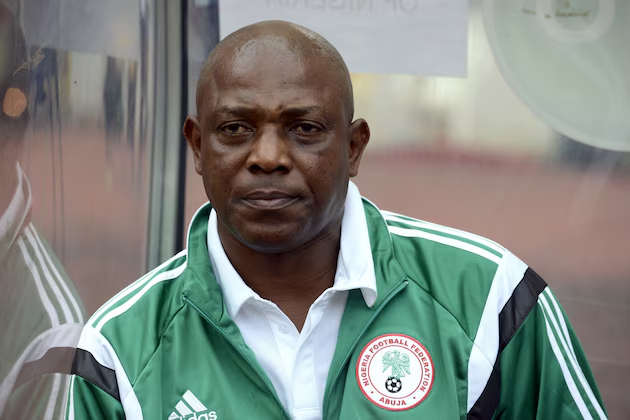
Stephen Okechukwu Keshi was a Nigerian footballer and coach who captained the Super Eagles to victory at the 1994 Africa Cup of Nations before coaching Nigeria to another AFCON title in 2013. Born on 23 January 1962 in Azare, Bauchi State, he played 64 matches for Nigeria, scored nine goals, qualified Togo for its first FIFA World Cup in 2006 and later led the Super Eagles to the 2014 FIFA World Cup.
Known as “Big Boss,” Keshi enjoyed a playing career that took him from Nigeria to Côte d’Ivoire, Belgium, France, the United States and Malaysia. After retiring, he moved into coaching and managed the national teams of Togo, Mali and Nigeria. He died on 7 June 2016 at the age of 54 after suffering a heart attack in Benin City, Edo State.
This biography examines Stephen Keshi’s early life, education, football career, coaching record, wife, children, cause of death, net worth, honours, achievements and the Stephen Keshi Stadium in Asaba.
Stephen Keshi Biography
| Full name | Stephen Okechukwu Keshi |
| Date of birth | 23 January 1962 |
| Place of birth | Azare, Bauchi State |
| Date of death | 7 June 2016 |
| Age at death | 54 |
| State of origin | Delta State |
| Nationality | Nigerian |
| Position | Central Defender |
| Nickname | Big Boss |
| Wife | Kate Keshi |
| Children | Four |
| Clubs | ACB Lagos, Anderlecht, Strasbourg and others |
| Honours | AFCON 1994 (player), AFCON 2013 (coach) |
Stephen Keshi Net Worth
Many people search for Stephen Keshi’s net worth; websites publish figures ranging from hundreds of thousands to several million US dollars. Neither Keshi’s family nor the Nigeria Football Federation has confirmed any of those estimates.
Keshi built his income through football. After starting his career with ACB Lagos and New Nigeria Bank, he played professionally in Côte d’Ivoire, Belgium, France, the United States and Malaysia. His spell at R.S.C. Anderlecht brought league and domestic cup titles before he finished his playing career in Malaysia.
Retirement opened the next chapter of his career. National team appointments with Togo, Mali and Nigeria provided another source of earnings, while tournament bonuses increased his income. Reports in 2014 placed his monthly salary as Super Eagles coach at about $45,000, excluding performance-related bonuses.
Commercial endorsements added to his earnings, although details of those agreements were never published. Because no financial documents were released after his death, the exact value of Stephen Keshi’s estate remains unknown.
Playing Career
Keshi started his senior career with ACB Lagos in 1979 before joining New Nigeria Bank a year later. During his time at the club, he helped the team win the West African Football Union (WAFU) Club Championship twice, establishing himself as one of Nigeria’s leading defenders.
His career took a new direction in 1984 after the Nigeria Football Federation suspended him from domestic football. The decision prompted his move to Côte d’Ivoire, where he signed for Stade d’Abidjan. He later joined Africa Sports, winning the Côte d’Ivoire Premier Division, the Côte d’Ivoire Cup and the Coupe Houphouët-Boigny.
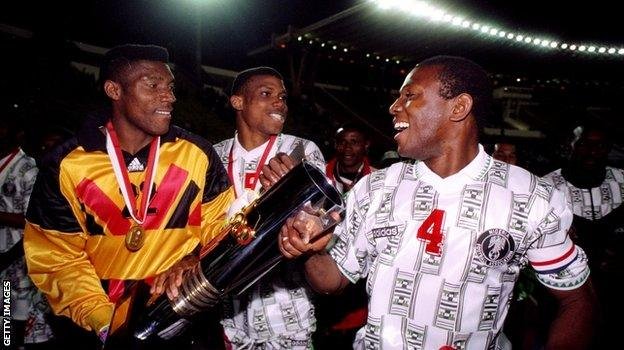
Success in West Africa earned Keshi a move to Europe. He joined Sporting Lokeren in Belgium before signing for R.S.C. Anderlecht in 1987. During four seasons with Anderlecht, he won the Belgian First Division, two Belgian Cups and the Belgian Super Cup. He later played for RC Strasbourg in France, RWDM in Belgium, CCV Hydra and Sacramento Scorpions in the United States, and Perlis FA in Malaysia before retiring from professional football.
International football became the defining stage of his playing career. Keshi represented Nigeria between 1981 and 1995, making 64 appearances and scoring nine goals. As captain, he led the Super Eagles to their second Africa Cup of Nations title in Tunisia in 1994 before guiding the team at the 1994 FIFA World Cup, Nigeria’s first appearance at the tournament.
Retirement did not end his involvement in football. Instead, he travelled to the United States to study coaching, preparing for the managerial career that later brought success with Togo and Nigeria.
Coaching Career
Stephen Keshi moved into coaching after completing coaching studies in the United States. His first major assignment came with Nigeria’s under-20 team, the Junior Eagles, during the 2001 African Youth Championship. The role introduced him to international management and prepared him for senior national team jobs.
In 2004, the Togolese Football Federation appointed Keshi as head coach of the national team. Within two years, he guided Togo to the 2006 FIFA World Cup, the country’s first qualification for the tournament. Although he left before the finals in Germany following disagreements over player bonuses and preparations, his work secured Togo’s place in World Cup history.
Togo brought Keshi back in February 2007 for a second spell. He remained in charge until 2008 before accepting an offer to coach Mali.
Keshi signed a two-year contract with the Mali national team in April 2008. He led the side to the 2010 Africa Cup of Nations, but Mali failed to progress beyond the group stage, ending his time with the team.
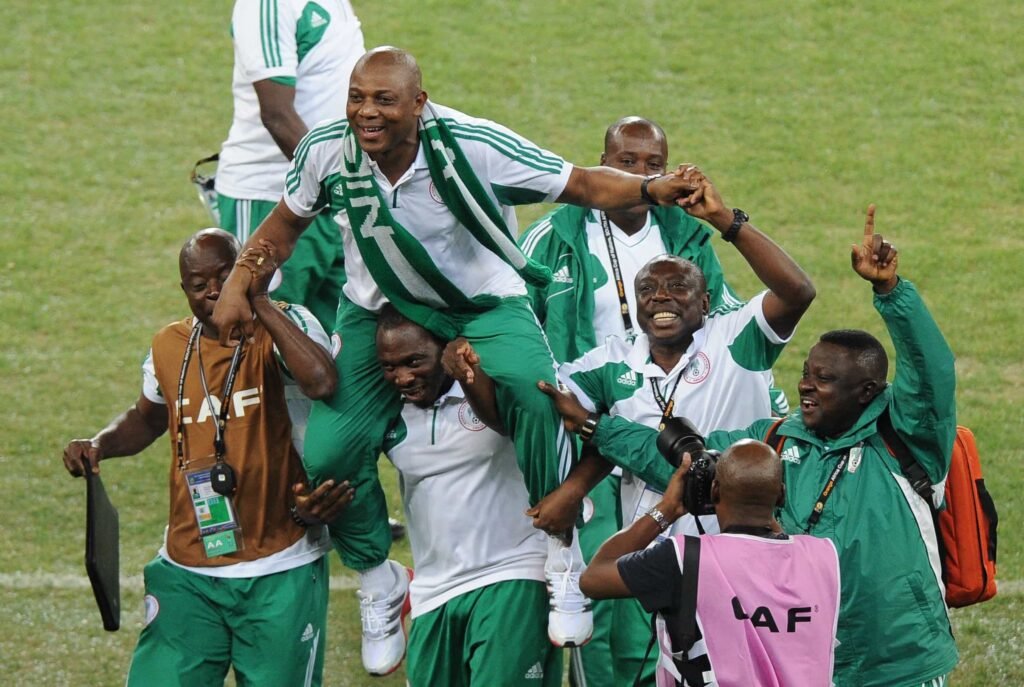
A brief return to Togo followed in 2011 before the Nigeria Football Federation named him head coach of the Super Eagles later that year. His appointment came after Nigeria failed to qualify for the 2012 Africa Cup of Nations, leaving him with the task of rebuilding the squad.
The changes produced immediate results. Keshi guided Nigeria to the 2013 Africa Cup ofNations in South Africa, where the Super Eagles defeated Burkina Faso 1–0 in the final to win the country’s third continental title. The victory made him one of only two men to lift the AFCON trophy as both a player and a coach. CAF later named him African Coach of the Year for 2013.
Later that year, Keshi managed Nigeria at the 2013 FIFA Confederations Cup in Brazil. The Super Eagles opened with a 6–1 victory over Tahiti before losing to Uruguay and Spain in the group stage.
Attention then turned to the 2014 FIFA World Cup qualifiers. Nigeria defeated Ethiopia 4–1 on aggregate in the play-offs to secure a place in Brazil. With that achievement, Keshi became the first African coach to qualify two different African nations, Togo and Nigeria, for the FIFA World Cup. Nigeria reached the Round of 16 before France ended the team’s campaign with a 2–0 victory.
Keshi’s second spell with Nigeria included several contract disputes and resignations that were later withdrawn. His initial contract ended after Nigeria failed to qualify for the 2015 Africa Cup of Nations. The Nigeria Football Federation reappointed him in April 2015, but both parties ended the relationship three months later.
Teams Coached by Stephen Keshi
| Year(s) | Team | Achievement |
| 2001 | Nigeria U-20 | Managed the Junior Eagles during the African Youth Championship. |
| 2004–2006 | Togo | Qualified the country for its first FIFA World Cup in 2006. |
| 2007–2008 | Togo | Returned for a second spell as national team coach. |
| 2008–2010 | Mali | Led the team at the 2010 Africa Cup of Nations. |
| 2011 | Togo | Brief third spell before taking charge of Nigeria. |
| 2011–2015 | Nigeria | Won the 2013 Africa Cup of Nations and qualified for the 2014 FIFA World Cup. |
Stephen Keshi Children
Stephen Keshi and his wife, Kate Keshi (née Aburime), raised four children during their marriage. Their eldest son, Kos Keshi, is the best-known member of the family and has played football professionally.
While Kos chose football, his siblings have stayed away from media attention. The Keshi family has rarely discussed their personal lives, leaving very little information about the younger children in the public domain.

Interest in Stephen Keshi’s children increased after his death in 2016, particularly as fans searched for updates about his family. Despite that attention, the family has continued to value privacy, and no verified information links his other children to professional football or public office.
Kos Keshi has occasionally represented the family at football-related events and tributes celebrating his father’s achievements. Beyond those appearances, the Keshi family has largely avoided public exposure and has focused on preserving Stephen Keshi’s legacy away from regular media attention.
Stephen Keshi Wife
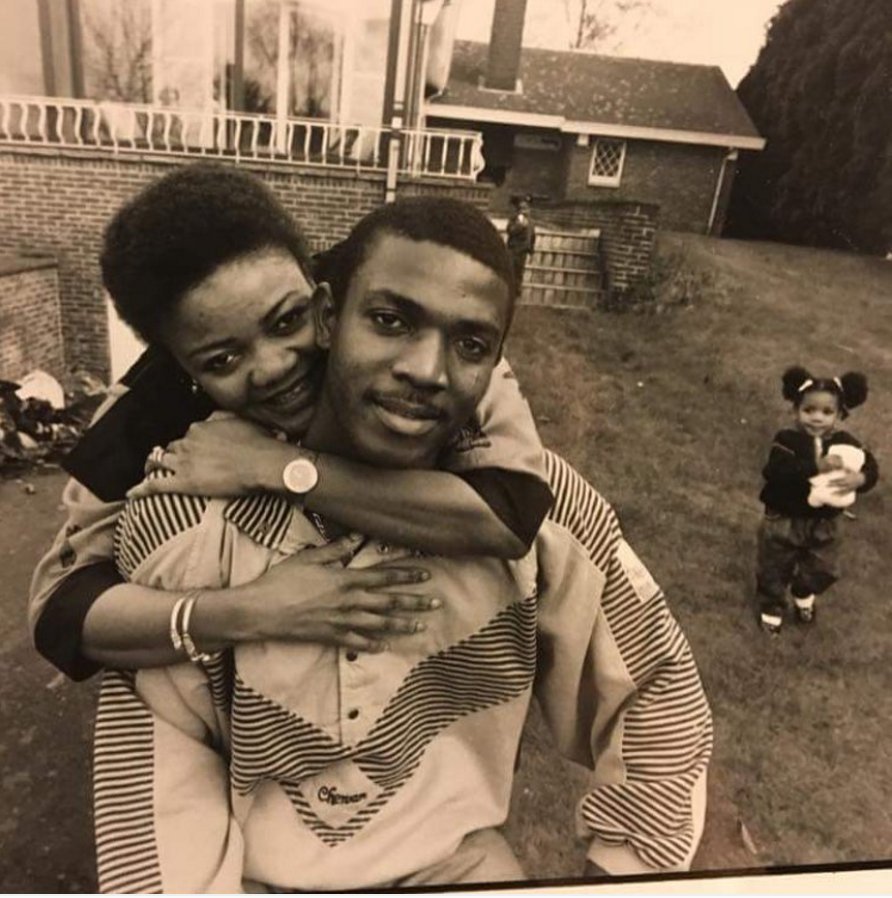
Kate Keshi (née Aburime) was Stephen Keshi’s wife. They married in the 1980s and raised four children during a marriage that lasted about 30 years.
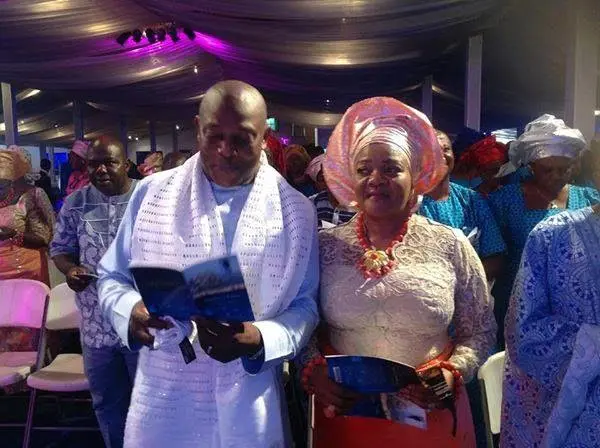
Away from football, Kate rarely appeared in public and chose to keep her family life private. While Keshi built his coaching career across Africa, Europe and beyond, she remained with the family and stayed out of media attention.
In 2012, doctors diagnosed Kate with cancer. She received treatment in the United States before dying on 10 December 2015.
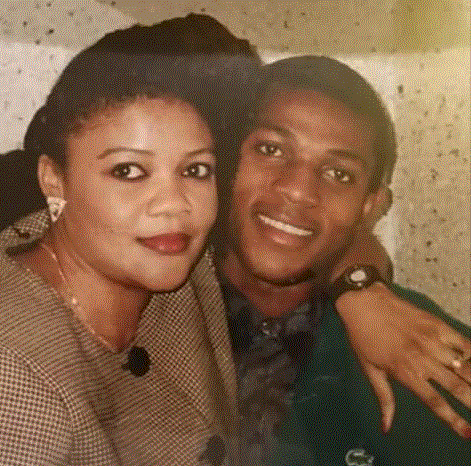
Her funeral took place in Benin City, Edo State, where relatives, friends, former footballers and officials gathered to pay their final respects. Less than six months later, Stephen Keshi died after suffering a heart attack, bringing a close to one of Nigerian football’s most respected families.
Is Stephen Keshi Alive?
No. Stephen Keshi died on 7 June 2016 after suffering a heart attack while being taken to hospital in Benin City, Edo State. He was 54 years old. His family announced his death the following day, prompting tributes from FIFA, the Confederation of African Football (CAF), the Nigeria Football Federation (NFF) and football organisations across Africa.
His death ended a career that spanned more than three decades as a player and coach. During that period, he captained Nigeria to the 1994 Africa Cup of Nations title, qualified Togo for its first FIFA World Cup and led the Super Eagles to victory at the 2013 Africa Cup of Nations.
Stephen Keshi Stadium
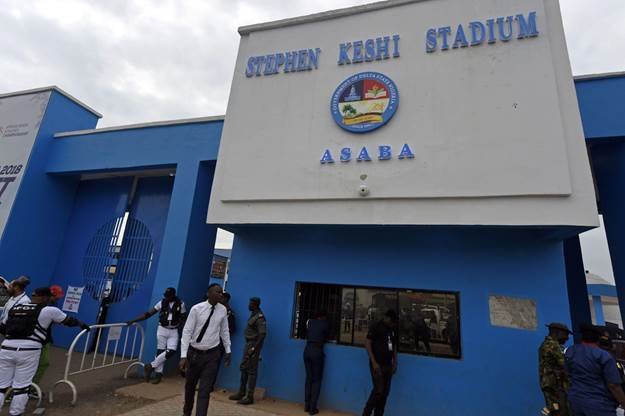
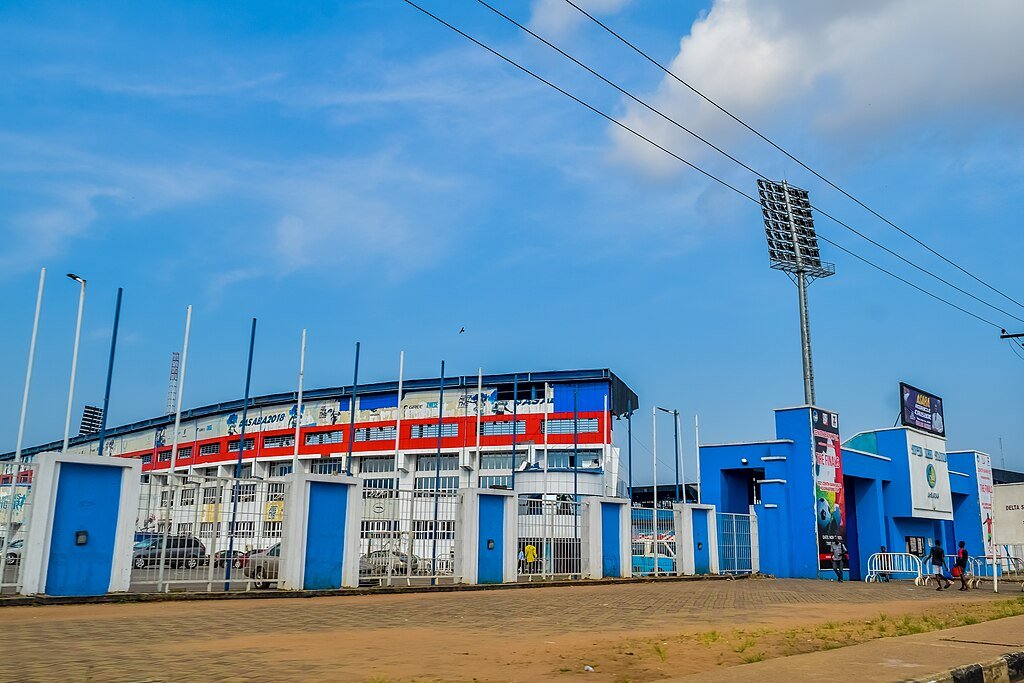
Stephen Keshi Stadium is a multi-purpose sports venue in Asaba, Delta State, Nigeria. The facility was formerly known as Asaba Township Stadium before the Delta State Government renamed it in honour of Stephen Keshi after his death.
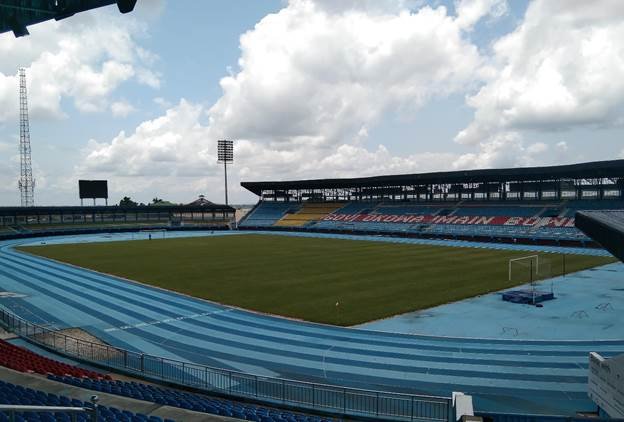
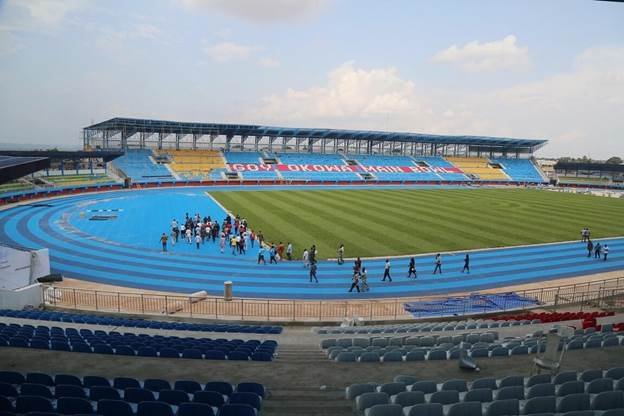
Construction started in 2001 but stopped for several years before work resumed. The completed stadium opened in 2018 with a seating capacity of about 22,000.
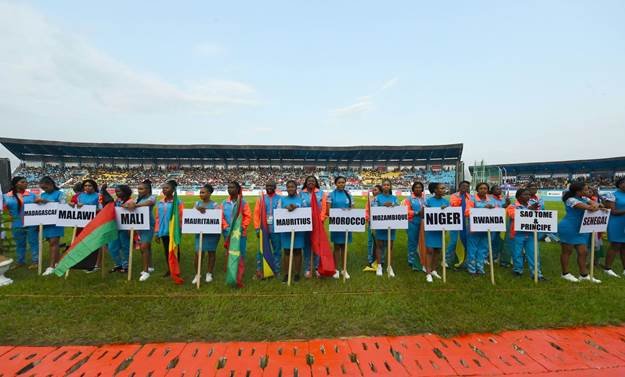
Soon after opening, the stadium hosted the 2018 African Championships in Athletics, attracting competitors from across Africa. It has also staged Nigeria Premier Football League matches, Federation Cup fixtures, athletics competitions and international football matches.
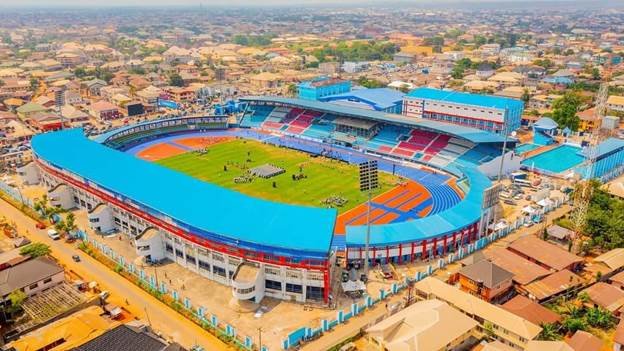
Two structural incidents occurred after the opening. A water tank collapsed within the stadium complex in September 2018, while part of the electronic scoreboard fell during heavy rainfall in 2019. Repairs followed both incidents, and the venue has continued to host sporting events.
Today, Stephen Keshi Stadium serves as one of Delta State’s main venues for football, athletics and other major events.
Stephen Keshi Honours
As a Player
New Nigeria Bank
- WAFU Club Championship: 1983, 1984
Africa Sports
- Côte d’Ivoire Premier Division: 1985–86
- Côte d’Ivoire Cup: 1985
- Coupe Houphouët-Boigny: 1985
R.S.C. Anderlecht
- Belgian First Division: 1990–91
- Belgian Cup: 1987–88, 1988–89
- Belgian Super Cup: 1987
Nigeria
- Africa Cup of Nations: 1994
- Africa Cup of Nations runner-up: 1984, 1988, 1990
As a Coach
Togo
- Qualified for the 2006 FIFA World Cup, the country’s first appearance at the tournament.
Nigeria
- Africa Cup of Nations: 2013
- Qualified for the 2014 FIFA World Cup
- Reached the Round of 16 at the 2014 FIFA World Cup.
Individual Honours
- CAF African Coach of the Year: 2013
- Member of the Order of the Niger (MON)
- Commander of the Order of the Niger (CON)
Stephen Keshi Legacy
Stephen Keshi left a lasting mark on African football through achievements that few coaches or players have matched. He became one of only two men to win the Africa Cup of Nations as both a player and a coach, joining Egypt’s Mahmoud El-Gohary.
His coaching career also produced another milestone. By qualifying Togo for the 2006 FIFA World Cup and Nigeria for the 2014 tournament, he became the first African coach to guide two different African countries to the competition.
His influence extended beyond results on the pitch. During his time with the Super Eagles, he gave opportunities to several home-based players and restored confidence after Nigeria failed to qualify for the 2012 Africa Cup of Nations.
Delta State honoured his contribution by renaming Stephen Keshi Stadium in Asaba after him. More than a decade after his death, his achievements remain part of Nigeria’s football history without repeating the honours already listed above.